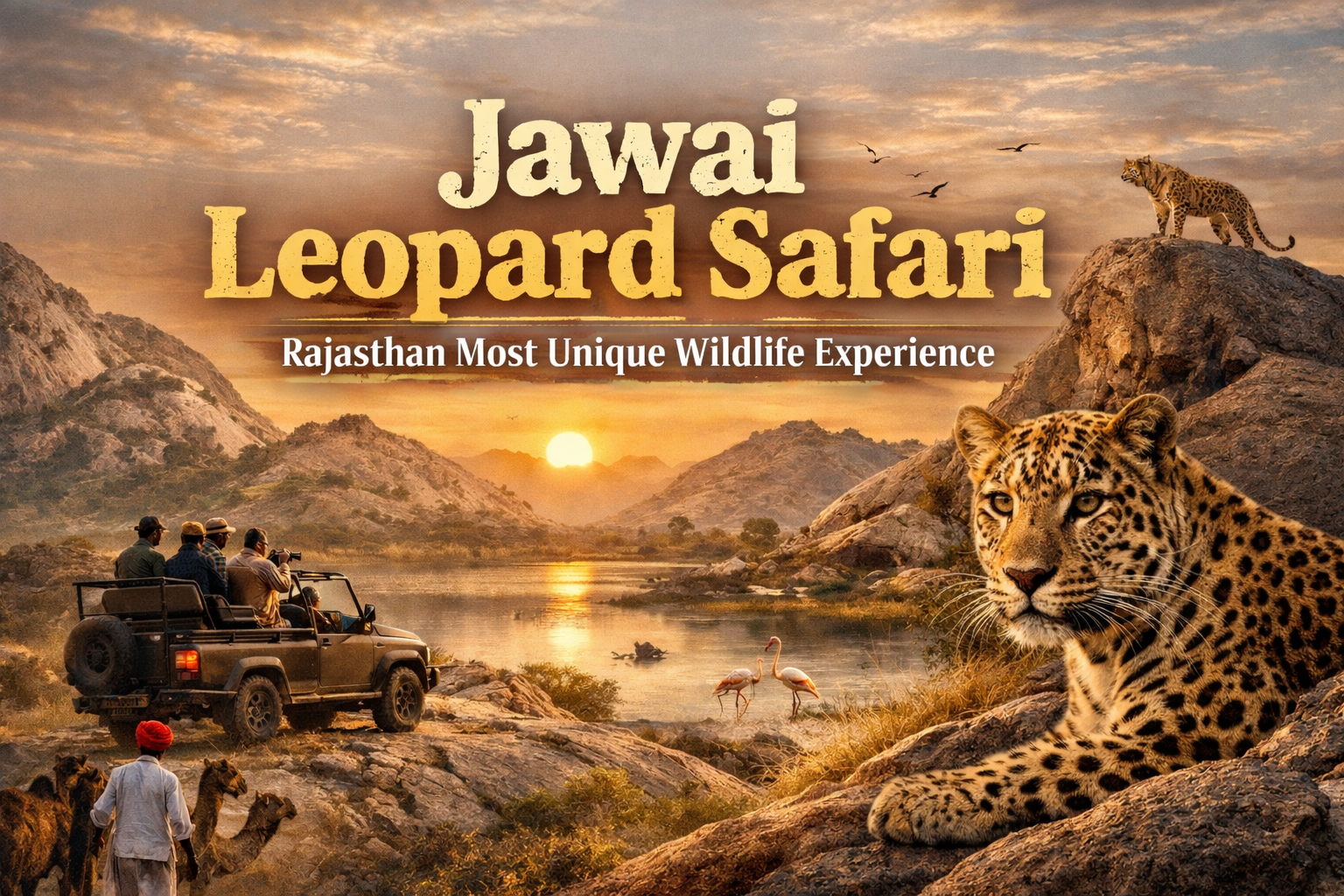
Jawai Leopard Safari is known as one of the most distinctive wildlife journeys in Rajasthan. Located in the rocky landscape near Jawai Bandh, this region offers a rare chance to see leopards living freely alongside local communities. Unlike forest-based reserves, Jawai presents open granite hills, ancient caves, and open grasslands where wildlife moves without boundaries. This natural setting allows visitors to observe animal behaviour in a calm and respectful manner while enjoying a well-guided safari program supported by local knowledge.
This area is very popular among wildlife enthusiasts, nature lovers, and photographers who want to experience something new in their lives. A professional tour guide ensures the safety of both tourists and wild animals. Also, it provides expert guidance so that tourists can learn something new and unique about wildlife and nature. Jawai Pug Mark plays a vital role in upholding responsible tourism practices that respect both wildlife and local traditions.
Landscape and Wildlife Setting
The Jawai region is known for its massive granite rocks and hills, which set it apart from the rest of India. These towering rock formations create a spectacular landscape amidst the surrounding lush greenery. This area of Rajasthan is particularly famous for its Leopard Safari Jawai, and the Jawai region boasts one of the highest leopard populations, making it an excellent place to spot these elusive big cats, which are rarely seen elsewhere in the country. Leopards primarily inhabit rocky areas and prefer to rest and roam in these regions rather than in dense forests. With its numerous rivers and lakes, the Jawai region also supports a large number of migratory bird species, as well as other local wildlife such as crocodiles, foxes, hyenas, and jackals. During a leopard safari, tourists can typically spot leopards resting on the rocks and in open areas. Photography enthusiasts, especially those interested in migratory birds, can also capture some stunning shots. Expert guides take guests on these tours in open vehicles and utilize tracking equipment to monitor and understand the movements of the leopards throughout the region.
Community and Conservation Balance
It’s remarkable that a peaceful relationship has existed for years between the wild animals of Jawai and the Rabari community, with both species coexisting on the same land without conflict. The Rabari community’s traditional lifestyle and their respect for nature have allowed both the wildlife and the community’s way of life to flourish and thrive in a delicate balance.
This also enhances the Jawai Safari experience, giving tourists the opportunity to witness how the Rabari community lives and practices its traditional methods of animal husbandry. Furthermore, tourists gain an understanding of the concept of conservation through coexistence rather than separation. Therefore, the safari provides tourists with both educational and visually enriching experiences, offering them a deeper understanding of life that they wouldn’t gain from merely superficial observation.
Safari Planning and Daily Flow
Safaris usually take place during early morning and late afternoon hours when animal activity is higher. Each drive lasts several hours and follows routes based on recent animal movement. Guides explain animal behaviour, terrain features, and safety measures in a clear and simple manner.
Accommodation options in the region are designed to support comfort while staying close to nature. A Jawai Leopard Camp style stay allows guests to relax between safaris while remaining connected to the landscape. Jawai Pug Mark supports structured schedules that balance leisure, safety, and learning throughout the stay.
Stay Options and Comfort
Many travellers prefer properties that blend natural surroundings with modern facilities. A well planned Jawai Resort provides calm spaces, clean rooms, local cuisine, and outdoor seating areas suited for relaxation after safari drives. These facilities are designed to keep disturbance to wildlife minimal while ensuring guest comfort.
Such stays also offer guided nature walks, bird watching sessions, and evening discussions about wildlife conservation. These activities help visitors understand the region more deeply without placing pressure on animal habitats.
Photography Opportunities
The open terrain and natural lighting create excellent opportunities for photographers to take pictures of wildlife; that’s why Jawai is such a popular wildlife photography destination. The soft tones that granite rocks cast during sunrise/sunset also provide a great opportunity for creating wildlife images. Many photographers will focus on leopards, various bird species, and large landscape images.
Photographers on the Jawai Leopard Safari have multiple opportunities to observe animals repeatedly, which allows them to compose their images with the greatest possible care and respect for the subject. Photographers always maintain ethical separation distances from the wildlife to prevent stress on the animals, which in turn allows for professional quality visual documentation of the animals that are photographed.
Responsible Travel Practices
Responsible tourism remains essential in sensitive landscapes like Jawai. Visitors are encouraged to follow guide instructions, avoid noise, and respect local customs. Waste management and minimal resource use are also promoted during stays.
Jawai Pug Mark follows guidelines that support long term conservation while offering structured safari programs. Such practices ensure that tourism benefits local communities and preserves wildlife corridors for future generations.
Why is Jawai so unique?
A perfect blend of wide open spaces, leopard sightings, and culture. Jawai enables visitors to see animals in their natural habitat, instead of disturbing them or their habitats. The Jawai Leopard Safari has become an excellent example of how nature, humans, and tourists can co-exist in a sustainable environment.
This approach makes Jawai a meaningful choice for travellers seeking depth, learning, and responsible wildlife travel in Rajasthan. Visitors often return with a stronger appreciation for landscape-based safaris, ethical guiding standards, and slow-paced travel rooted in awareness and respect.
Contact Us
Contact No. – +91 9950134838
Website – https://www.jawaipugmark.com/
Address – Village – Sena, Jawai Bandh, Pali, Rajasthan – 306126